Manufacturers should use pulse flours to fill nutrient gaps in gluten-free products, says dietician
A registered dietitian, Shelley Case sits on the medical advisory board of the Celiac Disease Foundation and Gluten Intolerance Group in the US and the professional advisory board of the Canadian Celiac Association.
Speaking at a webinar hosted by pulse industry body Pulse Canada, she said most people on gluten free diets were not getting enough fiber and also missed out on vitamins and minerals added to wheat flour.
Gluten-free products are often low in fiber, iron and B vitamins
A key part of the problem was that many gluten-free products were made with white rice flour, tapioca flour, potato starch and cornstarch, she said.
“The staples of gluten-free baking are white rice flour, tapioca starch, corn starch and potato starch – I’d say that 80-90% of gluten free products are still based on them.
“But they are low in fiber, protein, iron, B vitamins and other nutrients. Also, they are not usually enriched with vitamins and minerals like gluten-containing baked items, cereals, pastas and flours. Gluten-free products are also often higher in sugar, fat and calories.”
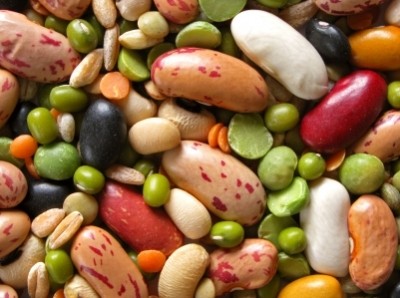
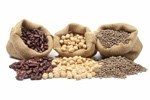
Adding pulses, which are rich in fiber, protein, vitamins and minerals, could address this nutrient gap and improve the texture and shelf-life of gluten free products, she said.
“I could not believe the quality, moisture, taste and texture of some gluten-free products made with pulse flours.”
Healthier granola bars, tortillas and pasta
Greener than some other sources of protein thanks to their ability to lock in nitrogen from the air, non-allergenic, non-GM and packed with fiber, protein, iron, vitamins and folate, pulses are also low in fat and gluten free.
But if Canada’s pulse industry wants to cash in, it has to work harder to educate manufacturers about how pulse flours, fibers, starches and proteins work in different food matrices and what might be a useful starting point when firms want to replace a percentage of, say, wheat flour with lentil flour in a given application, says Pulse Canada.
For example, recent research at the University of Manitoba had shown that replacing half of the oats in a granola bar with pre-cooked flaked lentils could double its fiber, protein, and iron content - and increase folate to 10% of the daily value in a 30g serving - without any loss of sensory qualities, it said.
Meanwhile, replacing up to half of the wheat flour in tortillas with navy, black and pinto bean flour could boost iron and fiber along with shelf-life as pulse flours were better at retaining water and reducing surface cracking, it added.
Mintel: Gluten free market is booming
The US gluten-free market has grown 27% since 2009 and was worth more than $6bn in 2011, according to market researcher Mintel.
Mintel’s Global New Products Database (GNPD) found that product launches with a gluten-free claim nearly tripled in 2011 to roughly 1700 products as compared to 2007.
Celiac disease is an inherited autoimmune disorder that affects about one in 100 people. It is triggered by the consumption of gluten - a protein found in wheat, rye and barley grains.
When someone with celiac disease ingests gluten, the lining of the small intestinal tract is damaged and important nutrients such as iron, calcium, vitamin D and folate cannot be absorbed.