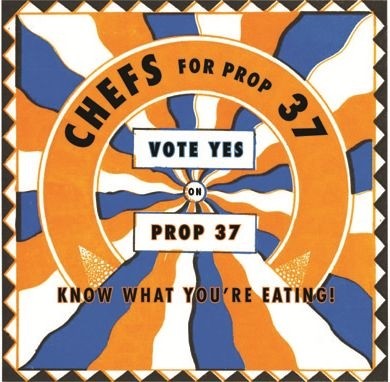
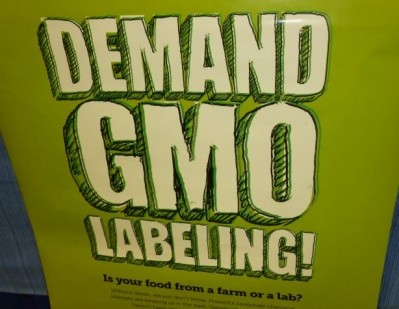
It doesn’t matter whether you support Prop 37 or oppose it; whatever happens in November when Californians vote on whether or not to label GMOs, everyone loses.
The horse has bolted on genetic modification. It’s out of the barn. Heck, it’s off the ranch, and crops from GM seeds account for 94% of all soy, over 90% of sugar beet and canola, and 88% of corn now grown in the United States. But the GMO labeling issue should serve as a wake-up call to industry, encouraging it to engage in respectful debate with consumers, rather than facing off against a resentful public.
In light of potential labeling, food manufacturers using ingredients from genetically modified organisms (GMOs) are likely to be concerned about consumer perception. They are right to be.
As spokesperson for the No on 37 campaign Kathy Fairbanks told this publication, “Any time you put a label on anything, it’s seen as a warning.”
However, if you’re a consumer who, for whatever reason, would like to know which foods on the market contain GMOs, Prop 37 won’t help you very much either.
Intention is everything
If GMO labeling is enacted in California, companies making foods without the GMO label will only have to show that their intention was to exclude genetically modified material, and prove their suppliers’ intention. There are no thresholds for accidental GMO content, there’s no testing required – and until 2019 up to 5% of a food product could be made with known GMO ingredients as well.
Even the media director for the California Right to Know campaign Stacy Malkan says that basing GMO labeling requirements on intention is important because “unfortunately contamination is a huge problem.”
If you want to avoid GMOs completely, start by moving another country – and then become a vegan.
Under Prop 37, meat and milk from animals that have been raised on GM feed are exempt from labeling, as long as the animals themselves have been bred naturally (as is also the case in Europe).
What about organic?
Think organic foods are GMO-free? Think again. There are no thresholds for the amount of genetically modified material that can be accidentally present in organic food either – as long as foods are produced using organic methods. So despite measures like creating buffer zones around organic farms, it is inevitable that some GM material winds up in organic fields, which is why many organic producers are opting into the Non-GMO Project Verification program, which fastidiously tests for GMOs at key points in the supply chain – although it doesn’t test finished products.
This seems like an extreme situation to me, but with or without GMO labeling, the Non-GMO Project’s label may be the only one that gives consumers information about content, rather than intent.
Meaningless
One of the options for food manufacturers under Prop 37 would be to include the statement “May be Partially Produced with Genetic Engineering”. If companies are concerned that their product may potentially contain GMOs, even if they are making efforts to avoid them, they could opt to include this statement on-pack.
This would result in consumers having just as much knowledge about the GMO content of their foods as they do now – which is to say they should assume it’s in everything. And such labels would provide about as much information about GMOs as Prop 65 warnings provide about cancer risk.
Now what?
It may be too late for a balanced discussion on GMOs, but the food industry needs to take the lead in communicating with consumers, on their own terms, about how new technologies can benefit individuals rather than – and as well as – corporations. If it doesn’t, the sector may become the only part of the economy in which all advancements are shunned – and slapped with quasi warning labels.



10 comments (Comments are now closed)
GM foods
so this article says there is no benefit...wouldn't it be better to have 5% of accidental gm food in your food rather than 100%! or anything more than 5%? the lower the amount of GM food in what I eat the better! This is beneficial because its the first step! And also makes the industry aware that we do care about the crap they give us! I don't want pesticides on my food that are dangerous like when MONSANTO, the creators of GM foods, made in the past...they made DDT! they are a dangerous company and need to be kept in check. Why would you trust a company that large to tell us our food is safe just like they said our pesticides were safe even though people got sick, and animals died??? I don't trust them when they say GM food is safe, they can pay off scientists to say that its safe just like they did with DDT! No scientist in their right mind thought DDT was okay if you look at the chemicals or tested it on an animal!!!! I dont want GM food from this scary company or from any other! I want real food!
Report abuse
Posted by Kendall
21 September 2012 | 01h42
GM ADDING TO AMYLOID DISEASES
GM MODIFIED FOODS ADD NO BENIFICIAL VALUE TO HUMAN OR ANIMAL HEALTH. THIS MAY BE THE NEXT STAGE IN SELF DISTRUCTION FOR PROFIT. Adding to Mycotic Fungisides, Mycoplasmas and Amyloid diseases that may increase tenfold the current malaise of chronic diseases over the present bad science induced diseases .
Report abuse
Posted by Harry
12 September 2012 | 14h45
No Human Safety Studies
Until there are peer reviewed human safety studies on these man made foods I won't trust their claims of safety for consumption by myself or my children.
Report abuse
Posted by Dale S
11 September 2012 | 16h01
Will FDA Preempt Prop 37
Will FDA preempt Prop 37 if it passes? Maybe not but it can emasculate the claim like it did with the issue of rBST free milk. Read more at: http://bit.ly/Poh7Dh
Report abuse
Posted by Jeff Nedelman
05 September 2012 | 19h17
Excellent Analysis - Europeans have turned this to win-win!
This is indeed a well-written analysis of a lose-lose situation – at least if viewed short-term.
For more than a decade and a half, the U.S. food industry has rigorously, and successfully, swept any GMO debate so thoroughly under the rug that in November, when the genie will most likely pop out of the bottle in California, they really have to start facing a problem. Snickering about crazy Europeans, marketing managers have thought for years that their consumer-customers would remain peacefully ignorant for all times to come.
Brand credibility is already seriously challenged during the current campaign by the way major manufacturers openly and without any consideration of their own public image contribute to the anti-labeling camp. It will be outright down the drain once labeling begins – and I predict that will be the outcome!
VLOG, the German industry association Food without Genetic Engineering, represents combined sales of around 72 billion dollars, and our members have chosen to follow the regulatory platform offered by German law: Set up stringent IP systems and label food products GMO-free displaying an official seal. The result for some staple food brands, e.g., fresh milk, were sales increases of up to 15 percent!
Public perception of those manufacturers and retailers that have joined the wagon has skyrocketed - both, among consumers and among media.
Report abuse
Posted by Jochen Koester, Member of the Board, VLOG (Berlin, Germany)
02 September 2012 | 15h28
Communicate with Consumers?
Monsanto, Bayer, Dupont, Kellogs, Archer-Daniels-Midland, and all the other Big-AG companies have long ago lost the right to communicate with the people of this country. They have introduced food into the food chain that has never existed before. None of which has been tested because they convinced the FDA and USDA that the new crops are 99.99% the same as the non-GMO crops. They have engaged in suing farmers who's crops were ruined by cross contamination via the wind. They have created weeds that are immune to their herbicides (Palmer Amaranth in Georgia For Example) thus more and more poisons are needed to control weeds. Current studies show that the bacteria in the ground are being modified. Their grand promise of more food has never been demonstrated. In fact the University of Georgia studied Cotton and found the farmer made more money planting standard cotton. There have never been any real studies because the contract signed when the seeds were purchased prohibits studies according to what I read. So as far as I am concerned, they have already contaminated my food supply and the only discussion I am interested in hearing is how much and when are they going to pay to clean up the mess they created
Report abuse
Posted by APhotoWzard
01 September 2012 | 22h38
So, two wrongs now make a right?
Yes, unfortunately, the genie IS out of the bottle.... so the industry's newest tactic to remedy the problem is to soothe us with the knowledge that they've already screwed us, so we'll hurt less if we just go with it and swallow whatever else they want to cram down our throats because "resistance is futile"? Cram THAT! Prop 37 isn't perfect, but more importantly, it's achievable. It's a very good start to eating the elephant, which one does one bite at a time. I still support Prop 37 wholeheartedly.
Report abuse
Posted by Jennifer Christiano
01 September 2012 | 17h31
Yes, but. . .
As a food industry employee (speaking for myself and no one else) this is a thoughtful post about just a couple of the many flaws of California's Proposition 37 on GMO labeling. And I agree that consumers deserve a thoughtful, informed and science based discussion on the topic. However, the burden should NOT be on the food industry. It should be the technology providers and their customers, production agriculture, that use and grow their products. The tech providers, in fairness, have tried to have that conversation, but the media continues to ignore it or worse, and irresponsible "activists" are allowed to spew emotional nonsense and fabrications without accountability or consequence. I would like to see responsible media outlets have facilitate this discussion, and this column is a very good start.
Report abuse
Posted by Bucknelldad
31 August 2012 | 19h35
no need to move.
If you really want to avoid GMO, keep supporting legislation and elected officials who support labeling and restrictions on GMOs.
Shop at farmers markets from farmers who are organic and use heirloom seeds.
Buy wild and free range animal products from farmers who promote sustainable and organic agriculture ( FYI.. GMO is hardly sustainable).
Finally get in touch with your animals.. Hunt and Fish.. its is exercise, and the best food on earth...
Report abuse
Posted by MA
31 August 2012 | 19h35
You have missed the point...
I think the author of the article missed the point. We need to be more transparent on labels. While the potential labeling provisions are not ideal, they will force manufacturers to be more open due to the fact that the issues will be surfaced even more.
While the animals may have left the barn...that is no reason to leave the door open. We need to stop the obfuscation of ingredient disclosure now.
I suggest the author become more informed on the issue by doing some basic research on the far reaching implications regarding both GMOs...and more importantly the initiatives by large companies to basically own the seed stock genetic profiles for the food we eat. Otherwise, we run the very real risk of stratifying the food supply and putting large companies between us, and the natural gene stock of the foods that Mother Nature has provided us with...
Report abuse
Posted by Robert Kay, PhD, MS
31 August 2012 | 17h08
Read all comments (10)