


Key takeaways:
- As GLP-1 use rises, reduced appetite is raising the bar for food products, making nutritional density per serving more important than volume or indulgence.
- Products that rely on bulk, sugar or habit rather than protein, fibre and micronutrients risk losing relevance as eating occasions shrink.
- GLP-1s are accelerating a broader shift toward smaller portions and higher expectations, forcing manufacturers to rethink product design rather than just portion size.
GLP-1 weight-loss drugs have barged into the market. In a short space of time, Ozempic, Wegovy and Mounjaro have shifted from specialist treatments to dinner-table conversation. Appetite suppression, once a side effect discussed quietly in clinics, is now reshaping how millions of people eat.
That matters for food manufacturers because this isn’t just about fewer calories. It’s about scrutiny. When people eat less, they become more selective. Portions shrink. Meals disappear. Snacks get skipped. And suddenly, products that once relied on habit, volume or indulgence have to justify themselves in a way they never did before.
Between early 2024 and early 2025, around 1.6 million UK adults reported using GLP-1 medications, with a further 3.3 million considering starting within the year. Those figures exceeded early NHS expectations at the time and reflected what was happening across other developed markets, including the US and parts of Europe, where uptake has often been faster and more commercially driven. In the US, polling by the Kaiser Family Foundation, supported by analysis from RAND, suggests that close to one in eight adults – around 12% – have taken a GLP-1 for weight loss, diabetes or another condition. Since then, use has continued to accelerate. Appetite suppression is no longer marginal – it’s becoming structural.
Alongside that rise, nutritionists are spotting a worrying assumption taking hold: that eating less means nutrition somehow matters less. If hunger isn’t there, people assume the body needs less. In reality, reduced intake raises the stakes. When there’s less food coming in, the nutritional quality of what does get eaten matters more, not less.
When eating less doesn’t mean needing less

Mark Gilbert, a nutritionist with more than 30 years’ experience working across healthcare, including the UK’s National Health Service (NHS), says this misunderstanding is becoming one of the biggest risks associated with GLP-1 use. Appetite suppression, he argues, is being confused with nutritional sufficiency.
“GLP-1 medications are changing the way people manage their weight, but there’s a lot of confusion about what that means for nutrition,” Gilbert says. “Many people underestimate the importance of adequate protein intake or assume appetite suppression removes the need for mindful eating.”
One common belief is that GLP-1s drive fat loss and little else. But weight loss is rarely that tidy. Whenever calories drop sharply, some lean mass loss is likely. Muscle isn’t just about aesthetics – it supports metabolism, glucose control, mobility and long-term health. Lose too much of it and the supposed health win starts to look fragile.

“GLP-1 medications can suppress appetite and support fat loss, but they don’t exclusively target body fat,” Gilbert explains. “Some loss of lean mass is expected during any weight-loss programme – the goal is to minimise this so that most of the weight lost comes from fat.”
Some reports suggest lean mass loss during GLP-1-driven weight loss may be higher than many users expect. That makes protein intake critical. Yet hitting higher protein targets becomes harder precisely because appetite is suppressed. Meals are smaller. Eating feels optional. Protein slips down the priority list.
Standard guidelines recommend around 0.75g of protein per kilogramme of bodyweight, but many experts suggest people actively losing weight – particularly on GLP-1s – may benefit from intakes closer to 1.2-1.6g/kg to help protect muscle. That’s a challenge even for motivated consumers. Without structure, it’s often unrealistic.
Fibre and micronutrients tell a similar story. Intake is already low across much of the population. Appetite suppression doesn’t fix that – it compounds it. Feeling less hungry doesn’t reduce the body’s need for vitamins, minerals or fibre. Over time, consistently missing those needs can show up as fatigue, weakness or declining metabolic health.
“Even when meals feel unnecessary, protein, vitamins, minerals and healthy fats remain critical for energy, cognitive function and maintaining muscle,” Gilbert says.
For food manufacturers, this is where the uncomfortable questions begin.
Why weak products are suddenly obvious
The GLP-1 effect is quietly exposing which products deliver meaningful nutrition and which ones were getting by on volume. When portions shrink, foods that rely on bulk, sugar or fat to satisfy start to look thin. Not in taste terms, but in functional ones.
In a world of fewer eating occasions, every serving has to earn its place. Products that don’t deliver protein, fibre or micronutrients in relatively small portions are easier to cut. They’re not ‘bad’ foods, but they’re poorly suited to an appetite-suppressed consumer.
This is particularly relevant in bakery, snacks, beverages and some areas of dairy, where portion sizes have historically been generous and nutritional density uneven. When people were eating more often, that imbalance was easier to hide. When they’re eating less, it’s exposed quickly.
What counts as a ‘weak’ product in this context isn’t about brand strength or indulgence. It’s about efficiency. Does this product deliver enough nutrition to justify its calories when intake is limited? If the answer is no, it risks being sidelined.
This doesn’t mean the market is heading towards joyless functionality. But it does mean that nutritional density is no longer a niche concern. It’s becoming a baseline expectation – particularly for products positioned as everyday, habitual or better-for-you.
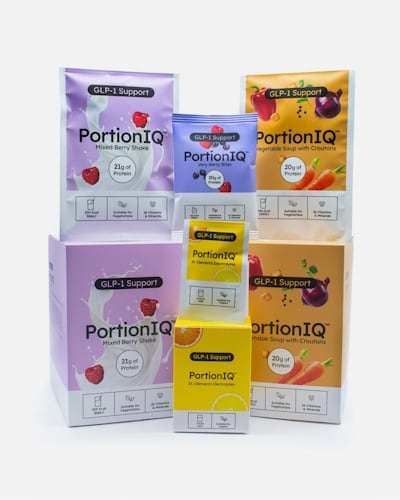
Cambridge Nutritional Foods’ new PortionIQ range reflects this shift. Its portion-controlled shakes, soups, bites and drinks are designed to deliver protein, fibre and essential micronutrients in compact servings, aimed at people using GLP-1s and others eating less by choice or necessity. The thinking is pragmatic rather than revolutionary: if appetite is unreliable, nutrition has to be built in.
Crucially, this logic isn’t limited to people on medication. Reduced meal frequency, smaller portions and higher expectations per bite are already visible among health-conscious consumers more broadly. GLP-1s are accelerating trends that were already underway.
A long-term shift, not a passing disruption

It would be a mistake for producers to treat GLP-1s as a temporary blip or someone else’s problem. Even if individual consumers stop using medication, the eating patterns formed during appetite suppression don’t vanish overnight.
Another assumption Gilbert pushes back against is that weight regain after stopping GLP-1s is inevitable. “Stopping GLP-1 treatment does not automatically result in weight regain,” he says. “But it can happen if sustainable habits are not maintained.”
Products that help people maintain protein intake, cover micronutrient needs and support muscle during weight loss are more likely to remain relevant once medication stops. Products that don’t risk being dropped as consumers become more selective and more critical.
For an industry already under pressure from reformulation targets, HFSS rules and rising input costs, GLP-1s add another layer of scrutiny. They don’t create new problems so much as expose existing ones.
The real wake-up call for food makers isn’t that people are eating less. It’s that eating less leaves nowhere to hide.


