


Key takeaways:
- A growing cohort of snack brands – from Oreo and Lay’s to Reese’s and Uncrustables – are generating $1bn+ in annual sales, with some comfortably in multi-billion territory.
- These billion-dollar brands are backing their scale with serious capital investment, expanding manufacturing capacity rather than retrenching.
- Elevated snacking occasions and the enduring appeal of ‘affordable indulgence’ continue to shield leading brands from broader grocery slowdowns.
If you want proof that snacking isn’t a ‘nice to have’ but a financial force, follow the money. As National Snack Day rolls around on 4 March, a clutch of bakery and snack brands are quietly generating more than $1bn a year in retail sales – and in some cases, far more.
At the top of the earnings table sits Oreo. The Mondelez International biscuit brand now delivers more than $4bn in annual global revenue, making it one of the most valuable snack brands in the world. In a grocery environment where parts of centre store are routinely described as ‘slower’, Oreo has kept moving.
And not quietly. Mondelez executives have repeatedly highlighted the brand’s performance in financial results, pointing to geographic expansion and a steady cadence of innovation. This isn’t a legacy biscuit brand coasting on nostalgia. It’s a global growth engine.
But Oreo is hardly alone. Across biscuits, crackers, snack cakes and salty snacks, billion-dollar brands aren’t just holding their ground – they’re expanding it. The real story isn’t that they’ve crossed the $1bn line. It’s that they’re still investing as though there’s plenty of runway left.
So who else is in the billion-dollar club – and what’s keeping them there?
Oreo, Ritz, Lay’s and Doritos

Oreo’s scale sets the tone. Mondelez has confirmed the brand generates over $4bn in annual revenue globally, supported by strong performance across developed and emerging markets. Biscuits remain a core pillar of the group’s portfolio.
Dirk Van de Put, CEO of Mondelez International, said in the company’s 3 February 2026 earnings release that Mondelez’s “extensive route-to-market capabilities and portfolio of iconic brands” give it “fundamental advantages in the years to come” as it executes its growth plans.
Oreo hasn’t ripped up its strategy, but it has refined it. The brand keeps the core intact while layering in limited editions, regional variants and different pack formats to stretch usage. When you’re already north of $4bn a year, even modest distribution gains or seasonal lifts can translate into serious revenue.

Then there’s Ritz, another Mondelez brand that has crossed the $1bn mark in annual sales. Crackers may not command headlines like viral cookies or loaded brownies, but their versatility – from lunchboxes to party platters – has kept volumes resilient. In an environment where some categories have seen ‘slower’ unit performance as pricing worked through, everyday snack staples have proven sticky.

Over at PepsiCo, Frito-Lay North America remains a juggernaut. While the division houses multiple brands, individual lines such as Lay’s and Doritos each generate multi-billion-dollar annual sales globally. Ramon Laguarta, PepsiCo’s chairman and CEO, has emphasised in financial results that the company’s convenient foods business continues to deliver strong net revenue growth, supported by brand investment and capacity expansion.
This isn’t just about defending share – it’s about building capacity to support it. PepsiCo has invested heavily in manufacturing expansion in recent years, including new plants and line upgrades in the US, to meet demand for its salty snack portfolio. That level of capital spend signals confidence that these brands are far from peaking.
Reese’s, Hostess and Little Debbie

Chocolate sits firmly in multi-billion territory too. Reese’s, owned by Hershey, generates several billions in annual sales and remains one of the company’s strongest performers.
Michele Buck, CEO of Hershey, has described the company’s core brands as offering “affordable indulgence” – a phrase that has surfaced repeatedly in financial commentary. It captures why chocolate has held up even as household budgets tighten. Consumers may adjust elsewhere, but small treats tend to survive the cut.
Seasonal launches and format extensions have expanded Reese’s beyond its original cup. Innovation hasn’t replaced the core – it has strengthened it.

In bakery, the billion-dollar threshold is just as visible. Hostess, acquired by JM Smucker in 2023 in a cash-and-stock deal valued at approximately $5.6bn, has been identified in company disclosures as a billion-dollar snack cake business. Under Smucker’s ownership, the brand has expanded distribution and leaned into multipacks and convenience channels. It occupies that reliable middle ground between nostalgia and impulse.
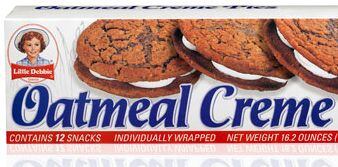
Meanwhile, Little Debbie, owned by McKee Foods, is widely regarded as a billion-dollar snack cake business in the US. The company is privately held and doesn’t publish detailed figures, but its national distribution and dependable seasonal rotations suggest meaningful scale.
These aren’t luxury brands. They’re habitual buys – familiar products that land in baskets week after week. In snack economics, repetition matters more than hype.
Uncrustables

If Oreo represents mature scale, Uncrustables represents acceleration. JM Smucker has said the frozen crustless sandwich brand is on track to exceed $1bn in annual sales by the end of fiscal 2026. Growth has been strong enough to justify expansion of its McCalla, Alabama production facility, with additional capacity coming online to meet demand.
Management has described Uncrustables as the ‘crown jewel’ of its portfolio. This hasn’t been a decades-long climb. Distribution widened quickly, velocity followed, and now capacity is racing to keep up.
The timing has helped. Circana has reported that snacking occasions remain elevated versus pre-pandemic levels, with consumers continuing to eat more frequently throughout the day. Products that blur the line between snack and light meal sit squarely in that shift.
Of course, growth isn’t uniform. Executives across the sector have acknowledged elasticity pressures and more selective purchasing behaviour. Some categories have seen ‘slower’ unit growth as pricing filtered through. But the brands operating above $1bn share common traits: deep distribution, strong equity and the ability to innovate without unsettling their core.
They also share a willingness to invest. Mondelez continues to expand biscuit capacity. PepsiCo is adding production lines. Hershey is broadening seasonal output. Smucker is scaling Uncrustables. None of these companies are behaving as though the cycle has turned.
And that’s the real takeaway.
Behind the everyday ritual of grabbing a biscuit or opening a bag of crisps sits serious industrial scale. The $1bn threshold isn’t just a round number – it signals structural relevance in retailers’ assortments and consumers’ routines.
From Oreo’s $4bn-plus dominance to the fast-climbing frozen sandwich segment, the snack hierarchy is evolving but not contracting. If anything, it’s consolidating around brands that combine familiarity with steady innovation.
Judging by the money flowing into factories and flavour pipelines, these billion-dollar snacks aren’t preparing to slow down.


