


Key takeaways:
- Grupo Bimbo says GLP-1 weight-loss drugs are already changing how some consumers eat, prompting the company to develop higher-protein bakery products, smaller snack portions and simpler recipes.
- Innovation is increasingly focused on functional and flexible formats, including protein bagels, half-loaf bread for smaller households and lower-sugar baked goods.
- While bread consumption remains soft in North America, strong demand for snacks – particularly Takis – is helping drive growth as Bimbo reshapes its global portfolio.
For months, the packaged food industry has been racing to understand how GLP-1 weight-loss drugs could reshape eating habits. Now the world’s largest baker says the shift is definitely visible. On its Q4 2025 earnings call, Grupo Bimbo said it’s detecting behaviour changes among consumers using GLP-1s and is actively reshaping its portfolio to match: bringing in protein-rich bakery products and smaller snack portions.
Bimbo isn’t a niche player making aspirational wellness bread for a small audience. It’s the world’s largest baking company, a major snacks player and sells into everyday eating occasions – the very moments GLP-1s are designed to shrink. When a group that big starts reworking recipes and portion sizes, it’s a signal.

The shift came through in unusually direct language for an earnings call. Asked about GLP-1 adoption and food consumption, CEO Alejandro Rodríguez Bas didn’t hedge. “We have a greater understanding of the phenomenon now and its consequences, and we have detected some changes in consumer behaviour among users,” he told analysts on 25 February.
And while the Mexican company spent plenty of time talking about growth, productivity and regional performance, the subtext was just about selling more bread. It’s about staying relevant in a market where fewer consumers want big portions, sugar-heavy treats or products they perceive as over-engineered.
Bimbo’s GLP-1 playbook
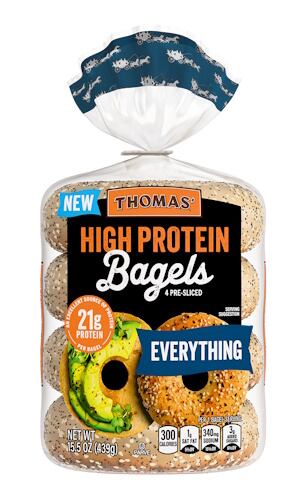
Bimbo laid out four product moves it’s leaning into as GLP-1 use grows, especially in developed markets. The first is reformulation with purpose: more fibre and protein in bakery. “One example, we’re making products with a higher fibre and protein content,” Rodríguez Bas said, adding that the company expects “more innovations like these ones” across breakfast bakery globally.
The second is portion control that doesn’t feel like punishment. “We’re also offering smaller portions in snacks with a minimum nutrition density,” the CEO said. That phrase – ‘minimum nutrition density’ – suggests Bimbo is trying to sidestep the old better-for-you trap where ‘smaller’ becomes synonymous with ‘less satisfying’. Instead, it’s hinting at compact products that still deliver something functional – protein, fibre, whole grains – so the consumer feels they’ve made a sensible choice, not a compromised one.
Third comes sugar reduction, including what Bimbo described as sugar-free recipes, paired with premium cues. “We have been developing sugar-free recipes and increased innovation in premium products,” Rodríguez Bas said. The interesting twist is how Bimbo frames premium here: not as bigger indulgence, but as a better experience per bite – a ‘reward’ that can coexist with lower sugar. That’s a smart pivot for a world where some consumers will still want treats but may only eat half of what they used to.
Fourth is simplification – less about claims, more about ingredient comfort. “Finally, we will continue to transition into simpler and more natural recipes,” Rodríguez Bas said. It’s a familiar direction across the sector but in this context, it reads like a defensive moat: when appetite is suppressed, consumers become more selective. They’ll still buy bakery and snacks, but they’ll want a reason and ingredient reassurance is one of the easiest reasons to communicate.
The call also hinted at the operational backbone behind all this. Bimbo talked about improving demand forecasting and network optimisation, and using AI as an enabler across functions. In Mexico, Rodríguez Bas pointed to cost control and admin efficiencies, noting: “For instance, we’re using AI in administrative tasks to look further for optimization.” It’s not glamorous, but it’s how portfolio change becomes scalable, and how smaller packs and reformulated products avoid turning into margin headaches.
Smaller loaves, changing households
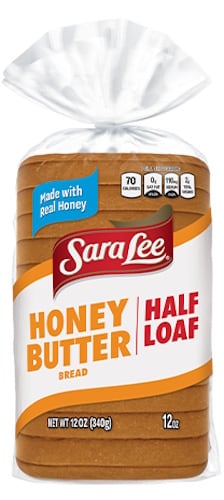
If GLP-1s are one pressure reshaping the aisle, demographics are another. Bimbo is leaning hard into a reality every bakery manufacturer knows: households are shrinking and not everyone wants a full-size loaf going stale on the counter.
In North America, executives flagged innovation aimed at smaller households and more accessible price points, including half-loaf formats in the Sara Lee bread range. It’s a deceptively simple move. Smaller loaves can reduce waste, hit a lower entry price and fit the shopping habits of single-person households and older consumers. They also create room for better value architecture without constant promotions – a theme Bimbo returned to repeatedly when discussing pricing discipline.
This also ties into a more uncomfortable truth: in some mature markets, the category isn’t expanding, so growth comes from taking share and capturing new occasions. Bimbo said North America remains soft on consumption, with Q4 sales down 3% excluding currency effects. Yet it’s seeing improving momentum and share gains in several categories.
The Mexico City-based company pointed to stronger performance in buns and rolls, mainstream bread and salty snacks. Innovation has helped – including protein bakery products such as Thomas protein bagels – but executives stressed execution as the bigger lever. The group’s direct-to-store delivery network remains one of its biggest competitive advantages, ensuring products land on shelves quickly and promotions are executed properly.
Takis, snacks and the growth engine
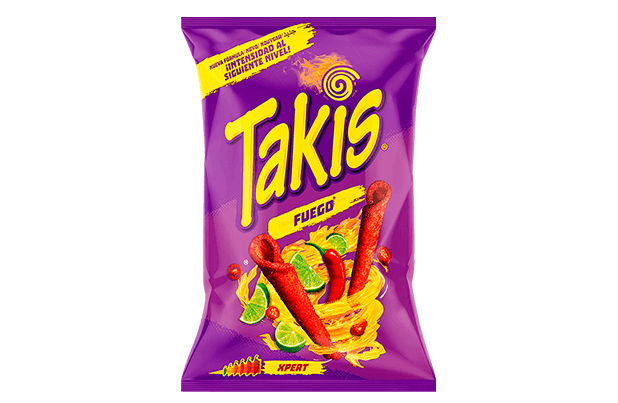
The snacks commentary was revealing, too, because it showed how important craveable brands remain even as the company talks about protein and fibre. In response to a question on why salty snacks were outperforming, Rodríguez Bas – who previously led the company’s global salty snacks business – went straight to demand pull. “Our product is awaited. It’s awaited everywhere,” he said.
Takis, in particular, continues to perform strongly, with double-digit growth in the fourth quarter. The brand’s bold flavours and strong cultural momentum have helped it break out well beyond its original markets, turning it into one of Bimbo’s most powerful growth drivers.
That reinforces a broader industry reality: for many bakery groups, snacks are increasingly doing the heavy lifting when packaged bread slows. The balance between indulgence and function is therefore becoming more important than ever.
At the same time, Bimbo is continuing to reshape the nutritional profile of its core portfolio. It said it remains on track to eliminate artificial colours by 2026 and that 98% of its bread, buns and breakfast portfolio already delivers what it describes as ‘positive nutrition’.
Add in moves toward more natural recipes, higher fibre content and protein enrichment, and even everyday bakery staples are being quietly reshaped for a more health-conscious consumer. The bakery aisle may still be built on staples like sliced bread and sweet baked goods, but the expectations around those products are shifting quickly.
The strongest line in the call wasn’t about sales or margins. It was the admission that the company has “detected some changes in consumer behaviour among users” of GLP-1 drugs. In other words: the future is already shopping the aisle. Bakery and snacks brands can either pretend it’s not happening or start building for the new appetite.
Key numbers
Grupo Bimbo earnings: Q4 2025 and full year 2025:
* Full year adjusted EBITDA margin expanded 30 basis points to 13.9% (second highest annual margin in its history)
* CapEx in 2025: $1.2bn (below prior guidance of $1.3bn-$1.4bn)
* Net debt to adjusted EBITDA: 2.7x (down 0.2x versus 2024)
* Mexico Q4 sales growth: 4.8%; Mexico Q4 adjusted EBITDA margin: 22%
* North America Q4 sales: down 3% excluding currency effects; North America Q4 EBITDA margin: 9.2% (up 330 basis points)
* Latin America Q4 sales growth: 15.4% excluding currency effects; margin pressured by integration costs tied to the Brazil acquisition
* Europe, Asia and Africa Q4 sales growth: 17.8% excluding currency effects; Q4 adjusted EBITDA margin: 13.8%
* Innovation rate now exceeds 12%
* Presence expanded to 93 countries


