


Inflation, GLP-1s, tariffs and geopolitical strife are posing substantial challenges across the food supply, but it appears luxury chocolate didn’t get the memo, according to data analytics firm NielsenIQ.
Super-premium chocolate, such as Dubai chocolate, makes up 10.6% of the US chocolate market in both dollars and units, according to NIQ, noting it is a “rare combination in a price-pressured category.”
Luxury defying the rules
NIQ’s “Luxury chocolate is defying the rules” report released in February shows that super-premium and premium chocolate sales are the two fastest growing in terms of dollars at 16.7% and 9.8% in 2025, respectively.
Meanwhile, mainstream chocolate dollar sales grew at 3.8%, value chocolate at 6.8% and private-label chocolate at 6.3%.

Premium brands’ successes are due to meticulous curations, drops-limited runs, disciplined distribution and powerful marketing campaigns, said Chris Costagli, vice president of thought leadership, food and beverage insights lead, at NielsenIQ.
“Brands need to focus on converting the excitement these drops generate into repeat. Dubai chocolate is a perfect example – it’s premium, it’s attention grabbing, but it’s so last season. What’s next?” Costagli said in the report.
Move over, non-premium
Premium chocolate is not just growing its market share, it’s taking it from other categories in the industry, according to NIQ.
Mainstream chocolate still dominates in the category with 54.6% market share, but despite growth in dollar sales, the category dropped in unit sales in 2025. This indicates that price is sustaining the tier, rather than purchases, NIQ noted.
“‘More chocolate’ isn’t the future. It’s fewer, higher-stakes purchases with brands that justify the premium,” Costagli wrote.
Super-premium won $11.6 million from other price tiers, according to the report, with nearly two-thirds (62.1%), or $7.7 million, coming from mainstream chocolate sales. This should be a warning to premium chocolatiers, Costagli said.
“While only 7% of super-premium chocolate growth was sourced from within the category, it does indicate that other price tiers are susceptible to luxury chocolate and need to work harder to hold onto buyers because a simple price-play is not enough,” the report noted.
Super-premium’s recruitment skills
Healthier choices and GLP-1s are driving consumers away from chocolate consumption, but the super-premium category seems immune to the trend, according to NIQ.
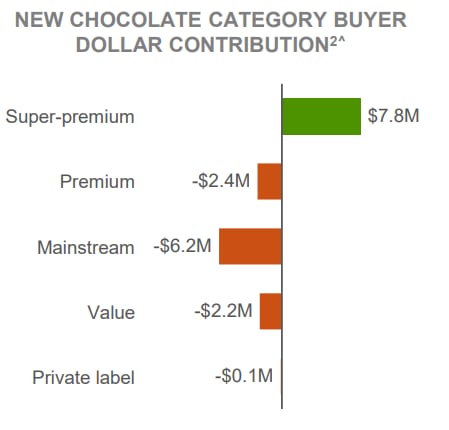
Unlike every other tier, super-premium chocolate is attracting new consumers, the report noted.
“Retained super-premium buyers drove 49% of growth but new-to-tier buyers added $60.9M in sales,” NIQ noted. “Super-premium chocolate is becoming an on-ramp to the category, not just an upgrade.”


