

Key takeaways:
- David sees itself as a food technology company rather than a protein brand, using proprietary ingredients such as EPG to reformulate indulgent foods without sacrificing taste or texture.
- The company’s expansion strategy is highly selective, targeting categories where fat and sugar drive calories and where technology can create a materially better product experience.
- Rahal believes long-term success comes from creating products consumers genuinely love, arguing that customer enthusiasm and repeat purchases matter more than short-term revenue growth.
David’s latest launch looked, at first glance, like another protein product entering an increasingly crowded market. Then the numbers started rolling in.
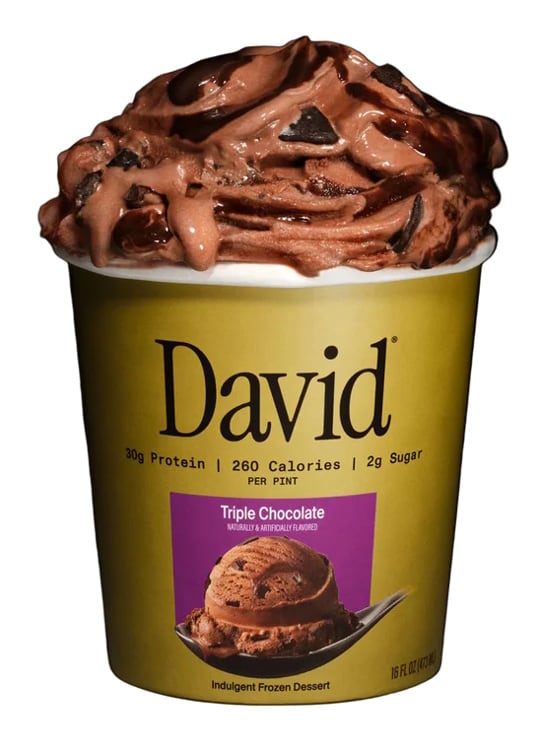
The New York-based brand’s new high-protein frozen dessert, which delivers 30g of protein per pint for as little as 210 calories, sold out online in just 28 minutes after launch. The rapid sellout comes less than two years after David burst onto the scene with its high-protein, low-calorie bars and quickly became one of the most talked-about brands in functional nutrition.
Yet Rahal insists the business was never meant to be a protein bar company. “David’s mission is to design tools that increase muscle and decrease fat. Protein bars were just the first product,” he says. Ice cream is simply the latest expression of that philosophy.
While many founders talk about building brands, Rahal increasingly talks about building technology platforms. The frozen dessert launch, featuring flavours including Cookie Dough, Triple Chocolate and Vanilla Bean, is less about entering ice cream and more about proving that indulgent foods can be fundamentally reformulated without sacrificing taste.
Technology over branding
Rahal’s philosophy runs counter to much of the modern food industry’s playbook.
Asked whether too many food brands focus on marketing rather than innovation, his answer is immediate. “Yes. Branding can get someone to try a product once. A true advancement is what makes the product worth coming back for.”
It’s a view that helps explain one of the most unusual moves made by a consumer packaged goods startup in recent years: David’s acquisition of Epogee, the developer of esterified propoxylated glycerol (EPG), a patented fat alternative that mimics the sensory properties of fat while delivering a fraction of the calories.
EPG has been approved for use in multiple food categories, including frozen dairy desserts, baked goods, confectionery and sauces, and provides around 0.7 calories per gram compared with nine calories for conventional fat.
For Rahal, controlling the ingredient wasn’t simply about vertical integration. “EPG lets us make foods that were previously impossible: high protein, low calorie, and actually good. Having security of supply is mission critical for the business.”
The acquisition also reflects how David evaluates new categories. Rahal says the company looks for products where fat and sugar account for a significant proportion of calories, where David believes it can create something materially better than existing offerings, and where long-term consumer demand remains strong.
“The future has to look better than the past,” he adds.
Ice cream fits that brief neatly. It’s a category built on fat, sugar and indulgence, but one where Rahal believes advances in food technology can deliver a significantly better nutritional profile without sacrificing taste or texture. For David, that’s a more compelling opportunity than simply adding protein to another product.
The Epogee acquisition, however, triggered one of the food industry’s most closely watched controversies of the past year.
Several companies that had been purchasing EPG sued David after the acquisition, alleging the deal effectively cut off their access to a key ingredient and created an anti-competitive advantage. The plaintiffs argued David had gained control over the sole commercial source of EPG and was using that position to exclude rivals. David strongly denied the allegations, arguing competitors had failed to secure long-term supply agreements and disputing claims of monopolisation. Parts of the litigation have since been dismissed, although legal disputes surrounding EPG continue to attract industry attention.
The controversy has only reinforced David’s image as a company willing to take an unusually aggressive approach to food innovation.
Rahal acknowledges the move was a gamble. “Betting on EPG instead of just making another protein bar. It made the company much harder to build, but much more defensible.”
Why protein ice cream’s moment may have arrived

David’s frozen dessert launch also arrives at a particularly interesting moment for the category.
Protein ice cream isn’t new. Brands such as Halo Top helped popularise the concept years ago. Yet consumer interest appears to be entering a new phase as high-protein diets gain momentum alongside the rise of GLP-1 weight-loss medications.
Consumers using GLP-1 drugs are increasingly being advised to prioritise protein intake to help preserve muscle mass during weight loss. That recommendation is helping drive demand for foods that deliver substantial protein without excessive calories, sugar or fat.
Rahal also believes the category is ready for a different approach. He argues that many earlier better-for-you ice creams reduced calories by adding air, increasing water content or removing cream, often at the expense of texture and indulgence.
David’s use of EPG, he notes, allows the company to retain the creamy mouthfeel associated with full-fat ice cream while dramatically reducing calories.
David’s positioning sits directly at that intersection.
“The goal was simple: make the best-tasting frozen dessert possible,” Rahal said at the launch. “Then make it David: as much protein and as few calories as physically possible.”
The resulting product contains 30g of protein per pint, less than 1g to 2g of sugar, and between 210 and 260 calories depending on flavour.
What’s notable is that David isn’t marketing the product primarily as diet food. Instead, it’s being presented as a technological breakthrough – an indulgent dessert engineered to deliver a nutritional profile that would traditionally have been considered impossible.
That strategy echoes the company’s broader messaging around its bars, which have become famous for delivering 28g of protein for just 150 calories.
The approach has clearly resonated with investors and consumers alike. David, founded in 2024 by Rahal and entrepreneur Zach Ranen, has rapidly become one of the fastest-growing names in functional food. The company has reportedly achieved a valuation approaching $725m and projected first-year revenues of around $140m, while attracting endorsements from influential figures across fitness, health and longevity communities.
Not everything has been smooth sailing though. The company has also faced lawsuits challenging calorie and fat calculations related to EPG-containing products. David has vigorously defended its labelling practices, arguing critics are using inappropriate testing methodologies for ingredients that aren’t fully metabolised by the body. One recent consumer lawsuit was voluntarily dismissed, although debate surrounding EPG’s measurement and labelling remains active.
The bigger lesson for food founders
Perhaps the most revealing part of Rahal’s thinking isn’t about protein, frozen desserts or even EPG. It’s about focus. Many brands chase adjacent categories in pursuit of growth, often risking dilution in the process. David’s expansion into frozen desserts could easily have fallen into that trap.
Rahal says the company uses a simple filter. “It has to make the category objectively better. More protein, fewer calories, better taste and experience. Otherwise we don’t do it.”
That discipline extends to his advice for fellow entrepreneurs. “Focus. Be very clear on what you are solving. Then say no to almost everything else.”
It’s a lesson many food startups struggle to follow. As funding becomes harder to secure and competitive pressures intensify, founders often expand too quickly, launch too many products or attempt to appeal to too many consumers.
David appears to be taking the opposite approach. Every product, whether a protein bar or a pint of frozen dessert, serves the same underlying mission: helping consumers increase muscle and reduce fat.
Rahal’s thinking also offers a glimpse of where David could look next. Asked where he sees the biggest white space in better-for-you food, his answer is donuts. “I’ve never seen a good better-for-you donut,” he notes.
Whether David ever enters the category remains to be seen but the answer illustrates the company’s broader approach. Rather than searching for opportunities to add protein to every product imaginable, David is focused on categories where technology can meaningfully improve products consumers already love.
Five years from now, Rahal doesn’t see David primarily as a protein company. “David will be a platform that develops tools that help increase muscle and decrease fat.”
That statement may sound ambitious but if a protein ice cream can sell out in 28 minutes and spark a wider conversation about the future of food technology, it suggests consumers may be increasingly willing to embrace a new generation of engineered indulgence.
And for Rahal, that’s the point. The frozen dessert isn’t the destination. It’s simply the latest proof that technology, not branding alone, may be the most powerful ingredient in modern food innovation.


