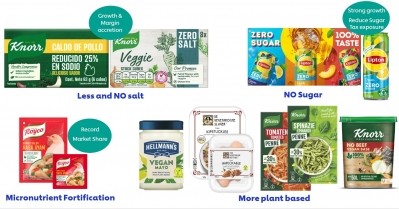
CPG companies are lowering sodium content, including through stealth-health, while larger market trends around clean-label might be distracting companies for developing healthier and more nutritious products, Tia Rains, VP of science, innovation, and...
Front of package nutrition labeling intended to help consumers select healthier foods and beverages by potentially calling out the amount of added sugar and other nutrients of interest could unintentionally expose children to higher levels of non-nutritive...
Research showing consumer preferences for sweetness intensity may not be as easy to reduce as their preferences for sodium suggests a “stealth health” approach of slowly lowering added sugar across the food supply may not be an effective strategy for...
Following a successful seed round last year, foodtech startup Lypid is ready to take its plant-based fat technology to a larger audience with the release of a whole-cut, plant-based pork belly, designed to meet the demand for healthier meats, brand founders...
The proposal is intended to provide more flexibility for foods with standards of identity where salt is a required or optional ingredient, and “facilitate industry innovation to reduce sodium in standardized foods,” the agency stated.
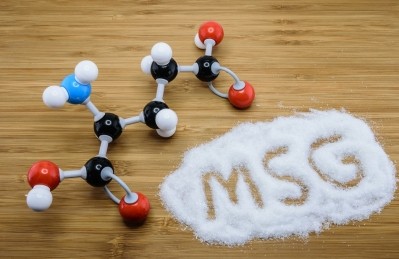
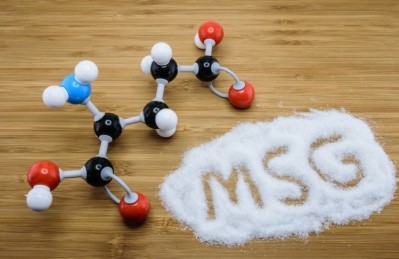
Monosodium glutamate — better known as MSG — might be shaking off its negative perception as CPG brands look to the ingredient to create savory flavor profiles and products with lower sodium.
Products making dietary guidance statements should contain a meaningful amount of the featured ingredient or food category and not exceed certain amounts of saturated fat, sodium and added sugar, according to FDA’s draft guidance for industry on questions...
Rabobank’s powerful matchmaking and once-exclusive innovation arm Foodbytes is opening access for all global startups, corporates and investors to its forward-looking insights, industry analysis and support for vetted emerging businesses with this week’s...
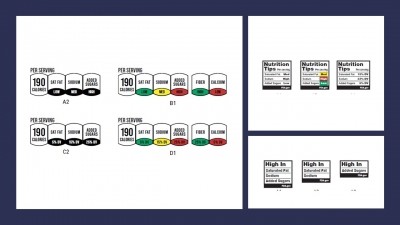
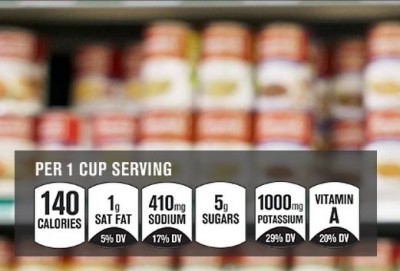
FDA once again is considering front-of-pack labeling “to help consumers interpret the nutrient information on food products,” including testing a controversial traffic light approach to show when a product is high or low in select nutrients and a design...
Taste may be considered king by most food and beverage makers, but at Unilever it no longer reigns supreme after the CPG giant adopted a new ‘holistically superior’ product testing framework and ‘boldly healthier’ food commitments for 2025 – a move that...
An analysis of the nutritional content of milks served in US schools shows many do not adhere to school nutrition standards or the Dietary Guidelines for Americans on added sugar or sodium, says nonprofit the Center for Science in the Public Interest...
Natural Products Expo East may not be as big as its West Coast counterpart, but the 18,500 registered attendees and more than 1,200 exhibitors who convened in Philadelphia earlier this month for the annual conference were just as enthusiastic and the...
Equinom has partnered with AGT Food and Ingredients Inc. to bring commercial quantities of its non-GMO ultra-high protein yellow pea protein ingredients to market and co-create a portfolio of functional plant-based ingredients.
Campbell Soup Co. reported a 6% net sales increase to $2bn in Q4 2022 (three months ended July 31, 2022) vs. the prior year, while volumes declined (-4%) for the quarter, revealing consumers may be rethinking some of their name brand purchases in favor...
A study exploring the connection between ultra-processed foods (UPF) consumption and reported adverse mental health symptoms found that participants who had a diet high in UPF were more likely to report instances of 'mentally unhealthy' and...
Well represented in key at-home eating categories of sauces (Rao's Homemade), yogurt (Noosa Yoghurt), and frozen entrees (Michael Angelo's and Rao's), Sovos Brands highlighted the performance of the company's largest brand Rao's...
PepsiCo has made progress in a number of areas of its business around regenerative agriculture and nutrition targets under its PepsiCo Positive (pep+) plan, the company's ESG program launched last year.
While its legacy may be in chocolate, The Hershey Company's portfolio of snacks has grown by leaps and bounds over the last several years, positioning the company as a growing snacking powerhouse, says Todd M. Scott, manager, corporate brand &...
Three years since first debuting its ClearFlo modifying ingredient technology used to reduce sensory off notes of stevia, Cargill is debuting a single solution and combination of the two: EverSweet stevia + ClearFlo, giving food and beverage manufacturers...
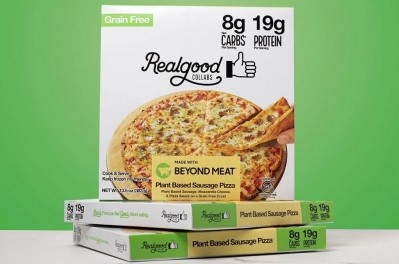
Better-for-you frozen foods brand The Real Good Food Company is on course to hit between $140m and $150m in net sales by the end of the year with a long-term goal of becoming a $500m brand, owing to a new production facility coming online this month and...
While many consumers may be aware of the drawbacks of a high sodium diet, fewer are actively reducing their sodium intake and believe it is the responsibility of food manufacturers to provide products that are both flavorful and low in sodium, presenting...
As frozen food sales stabilize from record-high numbers experienced during the height of the pandemic, older millennials have now become the category's largest consumer -- seeking a more diverse culinary selection of products made with fewer and...
New Year’s resolutions to eat healthier – including cutting back on sugar and alcohol or adopting a new diet – are back in 2022 after many Americans took a hiatus from them last year as they navigated pandemic-related stress, according to new research...
Global ingredient manufacturer Kemin Industries has begun construction on a new $40m facility in Verona, Missouri, to produce clean-label ingredients for animal protein applications.
Fresh Bellies has pivoted away from its original line of HPP fresh baby food and refocused its resources and efforts on the kids snacking category, a decision CEO and founder Saskia Sorrosa says has put the brand on the map in a big way.
The FDA has issued long-awaited final guidance for the food industry outlining voluntary, short-term (2.5 year) sodium reduction targets for 163 categories of packaged, prepared, and restaurant foods.
As part of a broad effort to reverse an alarming and profound increase in childhood obesity in the US during the pandemic, FDA is seeking to improve children’s diets, and is also taking steps to limit exposure to toxic elements in baby food and reduce...
While many parents say that their family has eaten more healthily since the start of the pandemic, one in five parents reports relying more heavily on fast food as a quick fix family meal option, according to the University of Michigan Health C.S. Mott...
From San Diego-based Debut Biotech, which is developing a range of high-value ingredients via a novel ‘cell-free’ biomanufacturing platform, to Virginia-based Bonumose, which has patented technology it claims could enable the “mass market adoption” of...
With an infusion of $10m in series A funds announced today the biotech and data science company Aromyx soon will be able to help more food and beverage brands quickly measure consumer perceptions more accurately than traditional taste test panels, which...
Sensient Technologies has acquired the assets of New Jersey-based Flavor Solutions, a custom product and flavor development company serving the food, beverage, and nutraceutical industries. Terms of the deal were not disclosed.
The School Nutrition Association (SNA) wants Congress to once again delay stricter sodium targets and roll back whole grain requirements for school meals out of fear that students will reject the changes and drop out of feeding programs, many of which...
Online personalized shopping platform, Sifter, is hoping to make label reading a thing of the past with a tool that instantly tells consumers which products fit their dietary needs and lifestyle.
The FDA is aiming to release long-awaited voluntary sodium reduction goals and draft guidance on the labeling of plant-based milk alternatives in the next 12 months.
Is consumer sentiment around MSG (monosodium glutamate) shifting? According to MSG supplier Ajinomoto, perceptions of the flavor enhancer have improved over the last three years since the company undertook a full-scale awareness campaign to educate consumers.
As just one part of consumers' larger definition of health and wellness, weight management has become less about the number on the scale and part of a broader holistic definition of what it means to be healthy, says Shelley Balanko, Ph.D., senior...
Kemin Industries has acquired privately-owned ingredient technology firm, Proteus Industries, Inc., expanding its portfolio of sustainable clean label solutions for meat manufacturing.
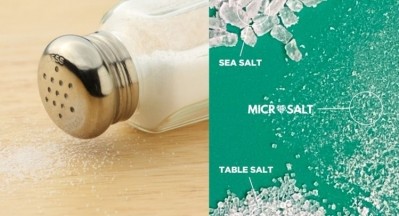
It’s well-known that the smaller the salt crystals, the saltier they taste, which means less is more, an enticing proposition for snack makers looking to reduce sodium. However, simply finely grinding table salt and sprinkling it on potato chips won’t...
Market projections for meat and dairy alternatives vary wildly, with Impossible Foods’ CEO predicting animal agriculture could hit a ‘death spiral’ by 2035, while Wells Fargo reckons plant-based meat will account for a rather more modest 4% of the US...
In 2010, the Institute of Medicine urged the FDA to tackle sodium in processed foods. In 2016, the FDA proposed voluntary guidelines, setting two-year and 10-year goals for 158 food categories… but they were never finalized. So is 2021 – with a new administration...
As the pandemic expands consumers’ definition of wellness to include not just physical fitness but also emotional welfare, they increasingly are seeking snacks that balance both – opening the door for products that are nostalgic and indulgent as well...
Ajinomoto has defended the safety of flavor enhancer MSG against claims made in a citizen's petition filed by the nonprofit Truth in Labeling Campaign that urges the FDA to rescind the ingredient's GRAS (Generally Recognized as Safe) status.
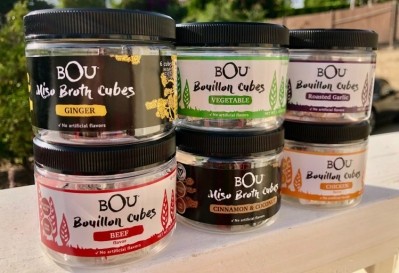
If you’re looking for a mature – and kind of dull - part of the grocery store, checkout the bouillon cubes category. According to Nielsen data* supplied to FoodNavigator-USA, US retail sales edged up 0.6% in the year to Oct 27, 2018 and a modest 2.8%...
School closures – and tentative re-openings – have compounded stress levels for families, while COVID-19-induced economic anxiety is also straining household budgets. So how can food and beverage brands come up with enticing – but affordable – recipes,...
An analysis of 21,096 food products from 9,083 brands across 44 categories found an association between Facts Up Front labeling – in which nutrition facts appear on the front of the package in addition to mandated nutritional information on the back of...
Adults who swapped out animal protein for plant-based protein saw lower levels of LDL cholesterol, moderate weight loss, and similar sodium intake and blood pressure levels (compared to animal protein consumption) after eight weeks, revealed a two-phase...
Americans need to more than halve their consumption of added sugars, reducing average consumption from 13% of daily energy intake to just 6%, the equivalent of 30g for someone on a 2,000 calorie-a-day diet, according to the expert committee advising the...
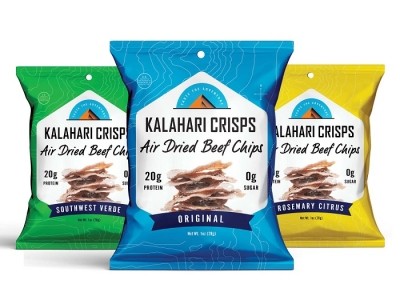
After helping to build a category for biltong – jerky’s less-processed, softer and often healthier cousin – the founders of Kalahari Snacks believe the “next evolution” in the meat snack segment is a trio of crunchy beef crisps that it launched online...
Mediterranean Umami – a clean-label sodium reduction ingredient combining sea salt, tomato concentrates, mushroom and seaweed extracts – is gaining traction in the plant-based meat space as firms come under increasing pressure to reduce sodium, says Israeli...
Daring Foods – a startup seeking to punch above its weight in the plant-based chicken category via a lower calorie product with a shorter, cleaner, ingredients list and bold branding – says it’s enjoying an above average sell-through rate in Sprouts,...